Red, irritated, itchy skin can make your dog or cat miserable — and sometimes what starts as a small irritated spot can quickly turn into a painful skin infection.
Pet skin problems are common, but they aren’t all the same. Allergies, hot spots, bacterial or yeast infections, parasites, and other conditions can cause similar symptoms, making it difficult to know what’s bothering your pet just by looking at their skin.
At Mixed Pet Veterinary Hospital in Charlotte, NC, we evaluate skin concerns ranging from mild itching to painful infections. If your pet develops a new or worsening skin problem, a same-day veterinary appointment can help identify the cause and get them feeling better sooner.
What Does a Skin Infection Look Like in Dogs and Cats?
A skin infection in dogs or cats can look different depending on the cause and where it develops. Some infections are easy to spot, while others may be hidden underneath thick fur or in areas your pet frequently licks or scratches.
Signs of a possible pet skin infection include:
- Red or inflamed skin
- Persistent itching or scratching
- Excessive licking, chewing, or biting at the skin
- Hair loss or thinning fur
- Scabs, crusting, or flaky skin
- Small bumps, pimples, or sores
- Moist, raw, or oozing areas
- Swelling or tenderness
- An unpleasant or unusual odor
- Greasy or discolored skin
You may also notice your pet suddenly focusing on one particular area of their body. Frequent licking or chewing can further damage the skin and allow an infection to develop or worsen.
Is It a Hot Spot or a Skin Infection?
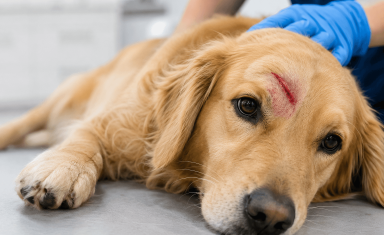
A hot spot, also called acute moist dermatitis, is a red, inflamed, painful area of skin that can appear suddenly and worsen quickly.
Hot spots are particularly common in dogs. They often develop when something causes a pet to repeatedly lick, chew, or scratch an area. Moisture and damage to the skin create an environment where bacteria can multiply, leading to further inflammation and infection.
A hot spot may appear:
- Bright red and inflamed
- Moist or oozing
- Painful when touched
- Surrounded by matted or missing fur
- Larger than it was just hours or a day earlier
Although a hot spot may initially look like a small patch of irritated skin, continued licking and scratching can make it significantly worse.
Hot spots can also be a sign of an underlying problem. Allergies, flea bites, ear infections, moisture trapped in the coat, and other sources of itching may all contribute to their development.
What Causes Skin Infections in Pets?
Healthy skin provides an important protective barrier. When that barrier becomes damaged or inflamed, bacteria or yeast that normally live on the skin may multiply and cause an infection.
Allergies and Itching
Skin allergies in dogs and cats are a common reason for recurring itching and skin infections. Environmental allergens, flea allergies, and food sensitivities can cause pets to scratch, lick, or chew their skin.
The resulting inflammation and damage can make secondary infections more likely.
If your pet regularly develops itchy skin, ear problems, or recurring infections, treating the infection may only be one part of the solution. Your veterinarian may also recommend investigating the underlying cause.
Bacterial Skin Infections
Bacterial skin infections can develop when bacteria enter damaged or inflamed skin. Depending on the severity, you may notice redness, bumps, scabs, sores, hair loss, odor, or discharge.
Veterinary treatment is important because the appropriate treatment can depend on the location and severity of the infection.
Yeast Overgrowth
Yeast can also cause significant skin irritation. Pets with yeast-related skin problems may have itchy, greasy, red, or thickened skin, sometimes accompanied by a distinctive odor.
Yeast problems can occur alongside allergies or other underlying skin conditions, which is why recurring symptoms should be evaluated rather than repeatedly treated at home.
Fleas and Other Parasites
Fleas, mites, and other parasites can cause intense itching and inflammation. Some pets are especially sensitive to flea bites and may develop significant irritation after very little exposure.
As your pet scratches and bites at the affected area, secondary skin infections can develop.
Moisture and Skin Folds
Warm, moist areas can create an ideal environment for bacteria and yeast. Pets with thick coats or skin folds may be more susceptible, especially around the face, neck, paws, groin, and other areas where moisture can become trapped.
When Does a Skin Infection Need Veterinary Care?
It’s a good idea to have your pet examined when a skin problem is painful, spreading, persistent, or causing significant itching.
Consider scheduling a veterinary appointment if your dog or cat has:
- A hot spot that is getting larger
- Raw, bleeding, or oozing skin
- Significant redness or swelling
- Constant scratching, licking, or chewing
- Noticeable pain or sensitivity
- Pus, discharge, or a strong odor
- Widespread hair loss, scabs, or sores
- Skin symptoms that keep returning
- Itching accompanied by an ear infection or ear discomfort
- A skin problem that isn’t improving
Some skin infections can spread quickly, particularly when a pet can’t stop licking or scratching the area. Getting treatment early can help prevent a relatively small problem from becoming much more uncomfortable.
How Are Pet Skin Infections Treated?
Treatment depends on what’s causing your pet’s symptoms. Because allergies, bacteria, yeast, parasites, and other skin conditions can look similar, an exam is often the best first step.
Your veterinarian may examine the affected skin and recommend diagnostic testing when appropriate to determine what’s causing the irritation.
Depending on the diagnosis, treatment may include medications to address infection, inflammation, itching, parasites, or an underlying allergy. Your veterinarian may also recommend medicated shampoos, topical treatments, or changes to your pet’s ongoing skin care.
The goal isn’t simply to stop the itching temporarily. When possible, identifying and managing the underlying cause can help reduce the likelihood of the problem returning.
Should I Treat My Pet’s Skin Infection at Home?
Avoid using human creams, ointments, or medications unless your veterinarian specifically recommends them. Products that are safe for people aren’t necessarily safe for pets, particularly if your dog or cat can lick the treated area.
You should also avoid picking at scabs or aggressively cleaning painful skin.
Until your pet can be examined, preventing licking or chewing may help limit further irritation. If the area is rapidly worsening, painful, bleeding, or oozing, don’t wait several days to see whether it clears up on its own.
Same-Day Appointments for Skin Problems in Charlotte, NC
Skin infections and hot spots can become uncomfortable quickly. If your dog or cat is suddenly scratching nonstop, develops a painful hot spot, or has red, irritated, or infected-looking skin, Mixed Pet Veterinary Hospital offers same-day veterinary appointments in Charlotte, NC when availability allows.
Our team can examine your pet, determine what may be causing their skin problem, and recommend treatment to help relieve their discomfort and address the underlying issue.
Concerned about your pet’s skin? Contact Mixed Pet Veterinary Hospital today to ask about a same-day appointment in Charlotte.