Seeing your dog suddenly favor one leg or struggle to walk normally can be concerning. Dog limping can happen for many reasons, from something as simple as a sore paw to a more serious joint or ligament injury.
Some dogs begin limping suddenly after running or playing, while others develop a gradual limp that becomes more noticeable over time. And because dogs don’t always cry or show obvious signs of pain, even a subtle change in the way your dog walks is worth paying attention to.
If you’re wondering, “Why is my dog limping?” here are six common causes, what you can look for at home, and when it’s time to see a veterinarian.
Why Is My Dog Limping?
Limping usually means that pain, weakness, or discomfort is preventing your dog from using a leg normally. The problem can originate anywhere from the paw and nails to the muscles, ligaments, joints, or bones.
How your dog is limping can sometimes provide clues. For example, a dog suddenly limping on a back leg after running may have a different type of injury than an older dog who has gradually become stiff or reluctant to use the stairs.
Because many conditions can cause similar symptoms, scheduling a vet exam is often the best way to determine exactly what’s causing your dog’s limp.
6 Common Causes of Limping in Dogs
1. Paw Injuries or Foreign Objects
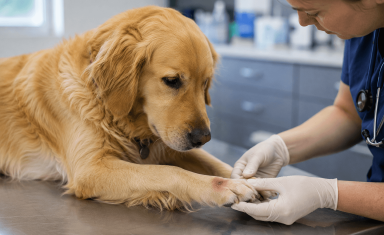
If your dog suddenly starts limping, take a look at the affected paw if they will comfortably allow you to do so. Sometimes the cause is right under their feet.
Common paw problems include:
- Cuts or abrasions
- Cracked or irritated paw pads
- Broken or torn nails
- Splinters or other foreign material
- Objects caught between the toes
- Insect bites or stings
You may also notice your dog repeatedly licking or chewing at the affected paw.
If you can see something superficial and easy to remove, such as a small piece of debris between the toes, you may be able to gently remove it. Avoid digging into the skin or attempting to remove anything that appears deeply embedded.
Deep wounds, significant bleeding, torn nails, swelling, or persistent pain should be evaluated by a veterinarian.
2. Muscle Strains and Sprains
Running, jumping, rough play, slipping on a slick floor, or landing awkwardly can lead to muscle strains and sprains.
A dog with a mild soft-tissue injury may still put weight on the affected leg but walk with a noticeable limp. You might also notice stiffness after resting or reluctance to run, jump, or climb stairs.
While a minor strain may improve with rest, it’s difficult to tell at home whether a limp is caused by a simple strain or a more significant orthopedic injury. If your dog’s limp persists, becomes worse, or appears painful, schedule a veterinary examination.
3. Knee and Ligament Injuries
Ligament injuries are another common reason for back leg limping in dogs.
One of the most common is an injury to the cranial cruciate ligament (CCL), a ligament that helps stabilize the knee. Similar to an ACL injury in people, a CCL injury can cause pain, instability, and difficulty bearing weight.
Dogs with a CCL injury may:
- Suddenly start limping on a back leg
- Hold the affected leg off the ground
- Have difficulty getting up
- Sit differently than usual
- Become reluctant to jump or use stairs
- Develop a limp that improves and then returns
Some CCL injuries happen suddenly during activity, while others develop gradually as the ligament weakens.
A vet exam is important if a knee or ligament injury is suspected. Without appropriate treatment, instability in the joint can contribute to chronic pain and arthritis.
4. Arthritis and Joint Pain
If your dog’s limp has developed gradually, particularly in a middle-aged or senior dog, arthritis or another joint condition may be contributing to the problem.
Arthritis causes inflammation and discomfort within the joints and can make normal movement increasingly difficult.
Signs can include:
- Stiffness after sleeping or resting
- Limping that comes and goes
- Difficulty getting up
- Reluctance to climb stairs
- Hesitation before jumping onto furniture or into the car
- Slowing down on walks
- Decreased interest in playing or exercising
Some dogs with arthritis may seem stiff when they first get up but move more comfortably after walking around for a few minutes.
Joint pain shouldn’t simply be dismissed as a normal part of getting older. Veterinary treatment can help manage discomfort and support your dog’s mobility and quality of life.
5. Broken Bones or Dislocations
Fractures and dislocations can occur after falls, collisions, vehicle accidents, rough play, or other significant trauma.
A dog with a broken bone or dislocated joint may suddenly refuse to put weight on the affected leg. You may also notice significant swelling, severe pain, or a limb that appears to be positioned abnormally.
Suspected fractures and dislocations require prompt veterinary attention.
If you believe your dog may have a broken bone, keep them as still as possible and avoid attempting to straighten, manipulate, or splint the leg yourself. Contact a veterinarian or emergency veterinary hospital for guidance.
6. Infections, Inflammation, and Other Medical Conditions
Not every limp is caused by an obvious injury.
Infections, inflammatory conditions, developmental orthopedic problems, neurological conditions, and certain tick-borne diseases can affect a dog’s joints, muscles, or ability to walk normally.
Less commonly, tumors involving the bones or surrounding tissues can also cause persistent or worsening limping.
This is especially important to consider when a dog is limping without an obvious injury, the limp keeps returning, or additional symptoms develop.
Your veterinarian may recommend diagnostic testing to determine whether an underlying medical condition is contributing to your dog’s mobility changes.
Why Is My Dog Limping but Not Crying?
A dog can be in pain without crying, whining, or otherwise making it obvious.
Dogs often express discomfort through changes in their movement and behavior instead. In fact, limping itself is an important sign that something may hurt.
Watch for more subtle signs such as:
- Favoring one leg
- Taking shorter or uneven steps
- Walking more slowly
- Shifting weight away from one leg
- Licking a particular paw or joint
- Difficulty getting up or lying down
- Reluctance to jump or climb stairs
- Decreased interest in walks or play
If your dog is limping but not crying, don’t assume that means they aren’t experiencing pain. Persistent or significant limping deserves veterinary attention even when your dog otherwise seems like themselves.
When Should I Take My Dog to the Vet for Limping?
Not every limp requires an emergency trip to the veterinarian. A very mild limp that appears after activity and quickly improves with rest may be something you can monitor closely at home.
However, you should contact your veterinarian if the limp persists, worsens, keeps returning, or you aren’t sure what caused it.
Seek Prompt Veterinary Care If Your Dog:
- Won’t put any weight on the affected leg
- Is suddenly limping severely
- Appears to be in significant pain
- Has noticeable or increasing swelling
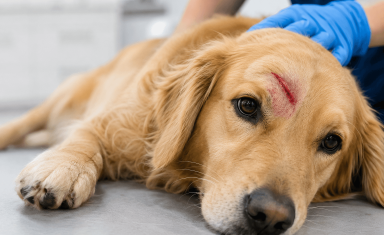
- Has a deep cut or significant bleeding
- Has a badly damaged or torn nail
- Has an object embedded in the paw
- Has a leg that looks bent or positioned abnormally
- Started limping after a fall, collision, or other significant trauma
- Is dragging a leg or having difficulty standing
- Has other symptoms such as lethargy, fever, or loss of appetite
Severe trauma, uncontrolled bleeding, inability to stand, or other potentially life-threatening symptoms should be evaluated at an emergency veterinary hospital.
What Should I Do If My Dog Suddenly Starts Limping?
If your dog suddenly starts limping, limit their activity while you determine what may be wrong. Avoid running, jumping, rough play, and long walks. Take your dog outside on a leash for bathroom breaks to reduce the chance of making a potential injury worse.
If your dog is comfortable being handled, gently check the affected paw and leg for obvious problems such as:
- Cuts or wounds
- Swelling
- A damaged nail
- Something caught between the toes
- An irritated paw pad
Stop if your dog becomes painful or resistant. Even normally gentle dogs may react unexpectedly when an area hurts.
You should also never give your dog human pain medications such as ibuprofen, naproxen, or acetaminophen unless specifically directed by a veterinarian. These medications can be dangerous or toxic to dogs.
If you don’t see an obvious cause or your dog’s limp isn’t improving, contact your veterinarian.
How Will a Veterinarian Diagnose My Dog’s Limp?
Your veterinarian will typically start by asking when you first noticed the limp, whether it began suddenly or gradually, and whether your dog recently experienced an injury or unusual amount of activity.
During the examination, your veterinarian may watch your dog walk and carefully evaluate the paws, muscles, joints, and bones for pain, swelling, instability, or changes in range of motion.
Depending on the examination findings, additional diagnostics such as X-rays may be recommended to look for fractures, arthritis, joint abnormalities, or other underlying problems.
Once the source of your dog’s limp is identified, your veterinarian can recommend treatment based on the underlying cause.
How Is Limping in Dogs Treated?
Treatment depends on what’s causing your dog’s limp. A sore paw or minor muscle strain requires very different care than a torn ligament, fracture, or chronic joint condition.
Depending on the diagnosis, treatment may include:
- Rest and activity restriction
- Veterinary-prescribed pain or anti-inflammatory medication
- Wound or paw care
- Treatment for an infection or inflammation
- Joint support or rehabilitation
- Weight management
- Surgery for certain orthopedic injuries
Your veterinarian can also provide guidance on how much activity is safe while your dog recovers and when they can gradually return to their normal routine.
Same-Day Care for Dog Limping in Charlotte, NC
If your dog is limping and you’re concerned about an injury or pain, Mixed Pet Veterinary Hospital can help determine what’s causing the problem and what treatment may be needed.
We offer same-day and urgent veterinary care in Charlotte, NC for many non-life-threatening illnesses and injuries, including limping, minor injuries, and sudden mobility concerns.
Whether your dog suddenly started favoring a leg or you’ve noticed a limp that isn’t getting better, it’s better to have the problem evaluated before it has a chance to worsen.
Is your dog limping or having trouble walking? Contact Mixed Pet Veterinary Hospital to ask about same-day appointment availability.
Frequently Asked Questions About Dog Limping
Why is my dog suddenly limping?
A dog may suddenly start limping because of a paw injury, torn nail, muscle strain, sprain, ligament injury, fracture, insect sting, or another painful condition. If your dog won’t put weight on the leg, appears to be in significant pain, or has swelling or an obvious injury, seek veterinary care promptly.
Why is my dog limping on a front leg?
Front leg limping in dogs can originate from the paw, wrist, elbow, shoulder, muscles, tendons, or bones. Paw injuries and soft-tissue strains are common possibilities, but persistent front leg limping should be evaluated by a veterinarian.
Why is my dog limping on a back leg?
Back leg limping in dogs can be caused by paw injuries, muscle strains, knee or ligament injuries, hip problems, arthritis, and other orthopedic conditions. A CCL injury is one possible cause of sudden or persistent back leg limping.
Why is my dog limping but still running and playing?
Dogs may continue to run, play, eat, and behave normally despite experiencing pain or discomfort. If your dog is limping, restrict strenuous activity and monitor them closely. A limp that persists, worsens, or keeps returning should be evaluated by a veterinarian.
How long should I wait before taking my limping dog to the vet?
A very mild limp may improve with a short period of rest, but don’t wait if your dog is unable to bear weight, is in significant pain, has swelling or an obvious injury, or experienced significant trauma. If a mild limp isn’t improving or keeps returning, contact your veterinarian.
Is a limping dog an emergency?
Not every limping dog needs emergency care. However, severe pain, inability to bear weight, significant trauma, an obviously abnormal limb, uncontrolled bleeding, or difficulty standing may require urgent or emergency veterinary care.