The holidays bring family gatherings, festive decorations, and plenty of delicious food. And if you have a dog or cat, chances are they’ll be nearby, hoping for a taste of whatever’s on your plate.
While sharing a little holiday cheer with your pet can be tempting, not everything on the Thanksgiving or Christmas dinner table is safe for them to eat. Some foods can cause digestive upset, while others contain ingredients that are toxic to dogs and cats.
The good news? There are several holiday foods that are safe for pets when prepared properly and offered in moderation.
At Mixed Pet Veterinary Hospital in Ballantyne, Charlotte, NC, we want to help you celebrate the season while keeping your four-legged family members happy and healthy.
What Holiday Foods Are Safe for Dogs and Cats?
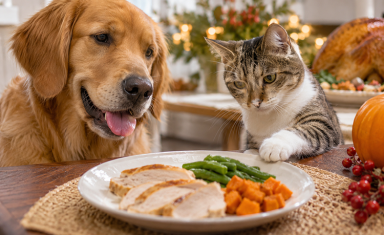
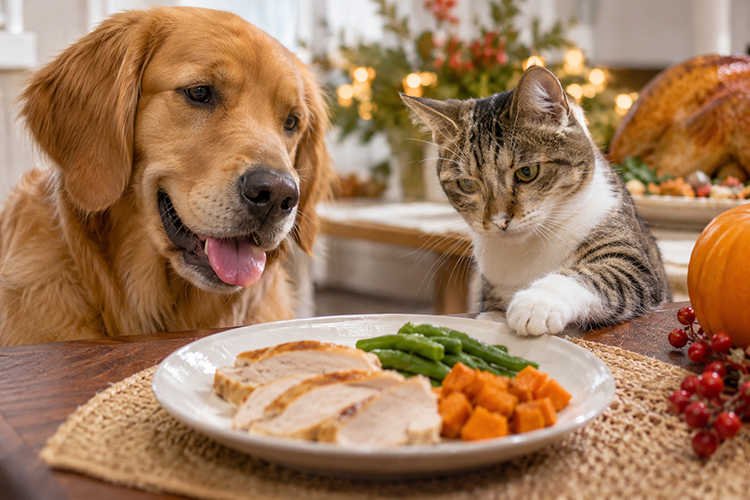
Several common holiday ingredients can be safe for pets when served plain, fully cooked, and without added seasonings, butter, or sauces.
1. Plain, Cooked Turkey
Turkey is a holiday favorite that many dogs and cats can enjoy.
Offer small pieces of fully cooked, boneless, skinless turkey without gravy, garlic, onion, or other seasonings.
Avoid turkey bones, fatty skin, and heavily seasoned meat. Cooked bones can splinter and cause choking or serious internal injuries.
2. Plain Pumpkin
Plain, cooked pumpkin is another pet-friendly holiday option.
Pumpkin contains fiber and can be offered in small amounts as an occasional treat.
Make sure you’re serving plain pumpkin rather than pumpkin pie filling, which may contain sugar, spices, or other ingredients that aren’t appropriate for pets.
3. Green Beans
Plain green beans are a simple, low-calorie holiday treat for many dogs.
They should be cooked or cut into appropriately sized pieces and served without butter, salt, garlic, or onion.
Skip traditional green bean casserole, which often contains rich sauces and seasonings.
4. Sweet Potatoes
Cooked sweet potatoes can be a nutritious occasional treat for dogs when served plain.
Remove the skin if needed, cut into small pieces, and avoid adding butter, sugar, marshmallows, or spices.
Sweet potato casserole may be a holiday staple, but it’s best left off your pet’s menu.
5. Carrots
Plain carrots can be a crunchy or soft treat, depending on how they’re prepared.
For easier chewing, consider offering small pieces of cooked carrot without added seasonings.
Always cut food into an appropriate size for your pet to reduce choking risks.
What About Cats?
Cats have different nutritional needs than dogs and are obligate carnivores.
While small amounts of certain plain vegetables may not be harmful, cats generally benefit more from animal-based treats, such as a little plain, cooked turkey.
Any holiday treats should remain a small addition to your cat’s regular, balanced diet.
Holiday Foods Dogs and Cats Should Never Eat
Some popular holiday dishes contain ingredients that can be dangerous or even life-threatening to pets.
Keep the following foods away from your dog or cat.
Chocolate and Holiday Desserts
Chocolate contains substances that are toxic to dogs and cats, particularly in dark chocolate and baking chocolate.
Chocolate desserts, brownies, and holiday candies should always be kept out of reach.
Some sugar-free desserts also contain xylitol, a sweetener that can cause severe poisoning in dogs.
Grapes and Raisins
Grapes and raisins can cause sudden kidney injury in dogs, even in relatively small amounts.
Avoid sharing fruitcakes, raisin bread, or desserts containing these ingredients.
Onions, Garlic, and Related Ingredients
Onions, garlic, chives, and leeks can damage red blood cells in dogs and cats.
These ingredients are commonly found in stuffing, gravy, casseroles, and seasoned meats.
Even cooked or powdered forms can be harmful.
Cooked Bones
Turkey and chicken bones may seem like a natural treat, but cooked bones can splinter into sharp fragments.
These fragments can cause choking, intestinal injuries, or blockages.
Dispose of bones securely where pets cannot reach them.
Rich, Fatty Foods
Gravy, buttery side dishes, fatty meat trimmings, and rich casseroles can cause vomiting or diarrhea.
In some dogs, high-fat meals can also trigger pancreatitis, a potentially serious inflammation of the pancreas.
Alcohol and Unbaked Bread Dough
Alcoholic beverages and foods containing alcohol should never be offered to pets.
Unbaked yeast dough is also dangerous because it can expand in the stomach and produce alcohol as it ferments.
Both require prompt veterinary attention if ingested.
Can Dogs Eat Thanksgiving Dinner?
Dogs can enjoy a few carefully selected Thanksgiving foods, but they shouldn’t eat a full plate of traditional holiday dishes.
Instead, consider making a small, pet-friendly holiday plate using:
- A few bites of plain, boneless turkey
- A small spoonful of plain pumpkin
- A few pieces of cooked green beans
- A small portion of plain sweet potato
Keep portions appropriate for your dog’s size, age, and health needs.
Treats and table scraps should generally make up no more than 10% of your pet’s daily calories.
If your pet has a sensitive stomach, food allergies, diabetes, or another medical condition, check with your veterinarian before introducing unfamiliar foods.
Holiday Food Safety Tips for Pet Owners
With guests coming and going, it’s easy for pets to sneak food when nobody’s watching.
A few simple precautions can help prevent holiday-related emergencies.
- Keep food out of reach. Don’t leave unattended plates, serving trays, or desserts where curious pets can access them.
- Ask guests not to feed your pets. Even well-meaning family members may not realize certain foods are dangerous.
- Secure the trash. Turkey bones, food wrappers, and discarded leftovers can be tempting to pets.
- Stick to familiar foods. Introducing several new treats at once can upset your pet’s digestive system.
- Create a pet-friendly space. If your dog or cat becomes overwhelmed during gatherings, provide a quiet area away from food and activity.
For pet owners hosting Thanksgiving or Christmas celebrations in Charlotte, a little preparation can make the holidays safer and more enjoyable for everyone.
What Should I Do if My Pet Eats Something Toxic?
If your dog or cat eats a potentially toxic holiday food, don’t wait for symptoms to appear.
Contact your veterinarian, an emergency veterinary hospital, or a pet poison control service immediately.
Depending on what your pet consumed, symptoms may include:
- Vomiting or diarrhea
- Excessive drooling
- Weakness or lethargy
- Abdominal discomfort
- Tremors or seizures
- Difficulty breathing
Some toxic foods can cause serious internal damage before obvious symptoms develop.
Do not induce vomiting or give home remedies unless instructed by a veterinary professional.
If possible, note what your pet ate, approximately how much they consumed, and when the exposure occurred.
Frequently Asked Questions About Holiday Foods for Pets
Can Dogs Eat Turkey on Thanksgiving?
Yes. Dogs can eat small amounts of fully cooked, boneless, skinless turkey without seasonings or gravy. Avoid fatty skin and cooked bones.
Can Cats Eat Thanksgiving Turkey?
Yes. Cats can enjoy small pieces of plain, cooked turkey as an occasional treat. Remove all bones, skin, and seasonings before serving.
Is Pumpkin Pie Safe for Dogs?
No. Pumpkin pie contains added sugar, spices, and potentially other ingredients that aren’t appropriate for dogs. Plain pumpkin is a better alternative.
Can Dogs Eat Mashed Potatoes?
Small amounts of plain, fully cooked potatoes may be safe for some dogs. However, traditional mashed potatoes often contain butter, cream, garlic, onion, or excessive salt, making them a poor choice for pets.
Keep Your Pets Healthy This Holiday Season with Mixed Pet
The holidays should be filled with happy memories, not unexpected veterinary emergencies.
By knowing which holiday foods are safe for dogs and cats, you can include your pets in the festivities without putting their health at risk.
At Mixed Pet Veterinary Hospital, conveniently located on Rea Road in Ballantyne, we provide veterinary care for dogs and cats throughout Charlotte, Pineville, Matthews, Waxhaw, Weddington, and surrounding communities.
Whether you have questions about your pet’s nutrition, digestive health, or overall wellness, our team is here to help.
Have questions about keeping your pet healthy this holiday season? Contact Mixed Pet Veterinary Hospital to schedule an appointment.
If your pet has ingested something toxic or is experiencing severe symptoms, seek emergency veterinary care immediately.